
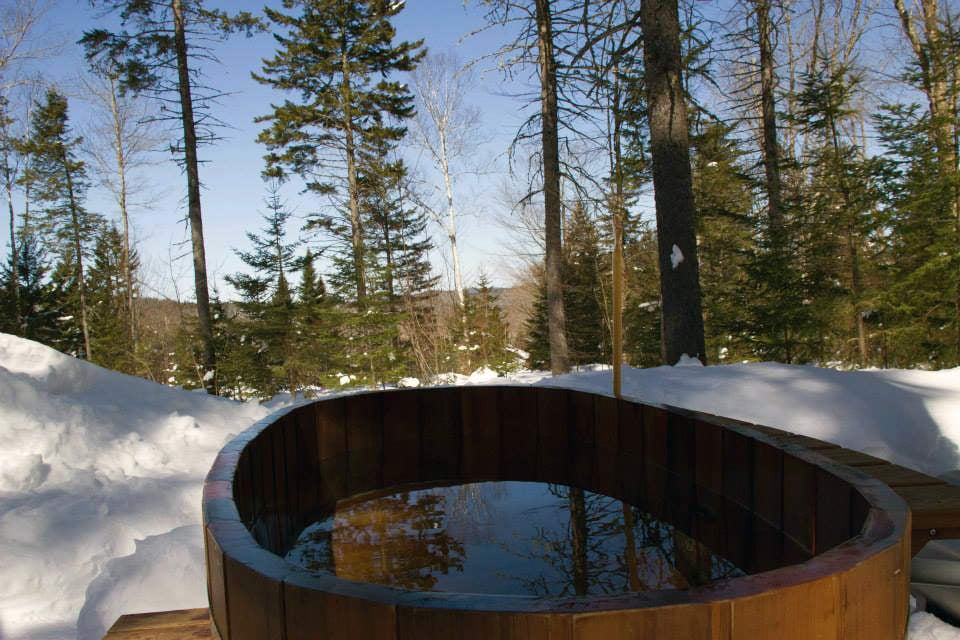
A hot tub in winter is the best part of owning one. Cold air, snow around you, and hot water up to your neck. Cedar takes the cold well, so a few simple habits keep it easy to run and safe to use through the coldest months. Here is how we get owners set for a hot tub in winter, from holding the heat to staying safe on the ice.
Hold the heat
First, the cover does most of the work. A cover in good shape traps heat between soaks, so it is the single biggest thing that keeps your running cost down. Cedar itself insulates and holds warmth well, so once the water is hot, a good lid keeps it there. A floating thermal blanket under the cover helps even more on the coldest nights. Because of that, leave the heater set to hold temperature, rather than heating from scratch each time.
Wood fired tubs in the cold
A wood fired tub really comes into its own in winter, since it heats on wood alone with no power needed. So keep dry, seasoned wood close by and under cover, so it lights easily on a freezing morning. Also give the fire time, because a cold tub takes longer to come up to temperature when it is well below freezing. Then clear snow away from the stove and the chimney before you light it, and keep the air path clear so it draws well.

Electric, gas and heat pumps in the cold
Each heater handles cold a little differently. Electric and gas hold a steady temperature through the coldest nights, which makes them easy in deep winter. Heat pumps are efficient, but they pull warmth from the air, so they slow down when it is very cold and often lean on a backup. If you are weighing the options for a hot tub in winter, then the hot tub heater page lays out how each one behaves.
How cold is too cold to use a hot tub in winter?
For most people, there is no such thing as too cold, as long as the water stays hot and the path is safe. So the real limit is your comfort, not the tub. When it is very cold, keep sessions a little shorter, drink some water, and try not to soak alone. Get in and out with care, since the shock of cold air on a warm body can leave you light headed. In short, the weather outside is the fun part.
Keep it from freezing
The safest setup for a hot tub in winter is simple, so keep the water hot and moving. Water that sits still and unheated in a hard freeze is what causes trouble. So if you use the tub through winter, leave it heated and let the pump run. Have a plan for a power cut too, since a long outage in a deep freeze is the main risk. If you cannot keep it warm, then drain it before it freezes.
When to close it down for the season
If you would rather not run it through the cold months, then close it down properly. Drain the tub fully, so no water is left sitting where it can freeze and split a fitting. Clear any low points and lines, dry it out, and put the cover on. That way the tub rests safe until spring. For most owners, though, a hot tub in winter is the whole point, so they keep it running.
Getting in and out safely
A safe path matters, so if you are still planning the spot, see our guide on where to put your hot tub. Ice is the real winter hazard, not the cold. So clear and grit the path to the tub, and watch the steps and the edge of the cover where splashes freeze. Keep a mat where you step out, a robe close by, and a light on so you can see. Move slowly, because the jump from hot water to freezing air can make you light headed.
Winter water care
Your routine does not change much in the cold. As usual, keep testing the sanitiser and the pH, and top up the water level, since a little is lost to steam and splash. Cold water behaves a bit differently than warm, so do not be surprised if the readings move. For general hot tub water safety, the CDC covers the basics, and our own guide to cedar hot tub water chemistry has the full method.
Snow and the cover
Finally, brush snow off the cover, and do not let a heavy load sit on it, because that shortens its life and presses cold into the water. A cover that still seals and sits flat saves the most heat. So if yours is tired, sagging, or waterlogged, replace it before winter, and it pays for itself in heating.
Saving on winter running costs
A few small things add up. A good, sealing cover is by far the biggest saver. Holding a steady temperature beats big swings, and a windbreak on the exposed side keeps heat in. A wood fired tub, of course, runs on wood alone, so there is no power bill for heat at all. So a hot tub in winter does not have to be expensive to enjoy.

In short, a hot tub in winter is easy once the heat, the cover, the freeze plan, and the path are sorted.
Want a cedar hot tub you can run all winter, off grid on wood alone? You can build and price one, or ask us which heater suits your winters.
Common questions
How cold is too cold to use a hot tub in winter?
For most owners there is no too cold, as long as the water is hot and the path is safe. Keep sessions shorter when it is very cold, and take care on the ice.
How much does it cost to keep a hot tub warm in winter?
It depends on the heater and the cover. A good, sealing cover is the biggest saver. A wood fired tub runs on wood alone, so there is no power bill for heat.
Can a hot tub freeze and get damaged?
Yes, if it sits unheated in a hard freeze. So keep it hot and circulating, or drain it fully. Do not leave it part full and unheated.
Do I need to drain a hot tub in winter?
Only if you are closing it down, or you cannot keep it warm. If you use it through winter, then leave it heated instead.
Will the cedar crack in winter?
No. Cedar is built for the outdoors, so it takes cold and snow well. Just keep the exterior sealed as normal, and it holds up season after season.
What if I go away for a week in winter?
Either leave it heated and covered so it never freezes, or drain it fully so no water sits in the lines. Do not leave it part full and unheated.