
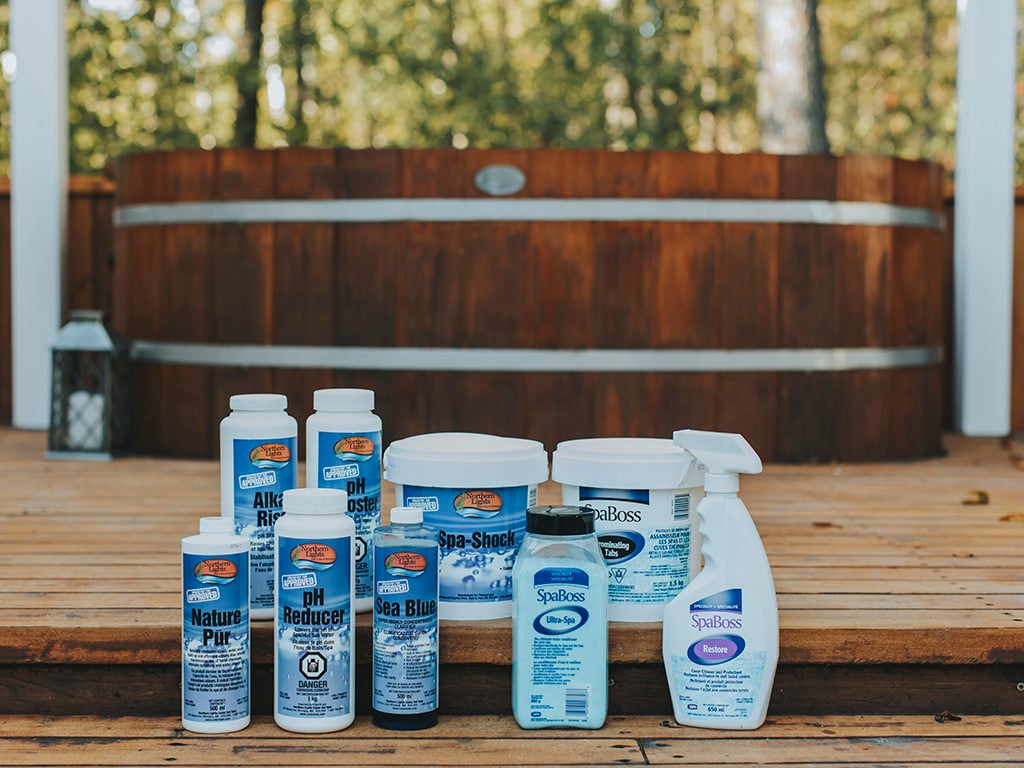
The short answer. Cedar hot tub water needs the same three numbers as any hot tub. Bromine at 3 to 5 ppm (or chlorine at 1 to 3 ppm), pH between 7.2 and 7.6, and total alkalinity around 80 to 120. What acrylic spa guides get wrong is the tolerance. Pool-strength chlorine and weekly shock are harmless to plastic and slowly wreck wood, so a cedar tub is run at the low end of those ranges, held there, and sanitised with bromine.
From Northern Lights Cedar Tubs, building Western Red Cedar tubs in Manitoba for 27 years.
On this page
- Is cedar hot tub water chemistry different from an acrylic spa?
- Why do acrylic spa guides get cedar hot tub water wrong?
- What should the numbers be in a cedar hot tub?
- Bromine or chlorine for a cedar hot tub?
- What do you add on the first fill?
- Why is my cedar hot tub water cloudy, brown, foamy or green?
- Questions we get asked
Is cedar hot tub water chemistry different from an acrylic spa?
The target numbers are the same. The tolerance is not.
Standard pool chlorine is the same chemical the pulp and paper industry uses to break wood down into fibre. Run it at pool doses in a cedar tub and the wood does exactly what the paper mill wants it to do. When Dan Jung, our president, gets a call about wood fibres in the filter, it nearly always ends the same way. The owner bought chemicals at the local pool store, and the pool store had never met a wooden tub.
Cedar gives something back, though. In 1993 the Food Research Institute at the University of Wisconsin tested wood and plastic surfaces deliberately contaminated with E. coli, Listeria and Salmonella. Bacteria on the wood were dead within three minutes. On the plastic they were not. That does not replace a sanitiser, and regulators will tell you nothing does, but it is why a cedar tub can sit at the low end of the sanitiser range and stay clean.
One honest admission. Dan owns acrylic tubs as well, and he will tell you the routine is nearly identical. What changes is the product you pour in and how heavy your hand is.
Why do acrylic spa guides get cedar hot tub water wrong?
Because they were written for a bathtub-shaped piece of plastic, and plastic forgives things that wood does not. Here are the five places the standard guide leads a cedar owner astray.
They tell you to shock every week. Acrylic is non-porous, so a pool-strength shock every Sunday costs it nothing. In cedar the same dose bleaches the staves grey and lifts fibre into the filter. We shock a cedar tub only to rescue water after the sanitiser has run out, and we use a chlorine-free product to do it.
They call brown water a metals problem. Iron and copper turn acrylic spa water brown, so the guides sell you a metal sequestrant. Brown water in a new cedar tub is tannin. It needs a few refills and nothing else.
They put calcium hardness at the top of the list. Acrylic shells and plaster pools need hardness in range to stop etching and scale. In a cedar tub, hardness and alkalinity only matter when your supply water is at an extreme. Dan concentrates on sanitiser and pH and little else, and he has owned both kinds of tub.
They never mention wood in the filter. It cannot happen to plastic, so it is not in the book. An owner who finds fibres treats it as a filter defect and keeps using the chemical that caused it.
They treat ozone and minerals as a footnote. On an acrylic spa those systems are a nice extra. On cedar, which is already hostile to bacteria, they are the difference between dosing every week and spending about $75 to $100 a year on chemicals and filters.
What should the numbers be in a cedar hot tub?
Hold the water here, and test before you add anything.
| Reading | Target | What it does |
|---|---|---|
| Sanitiser | Bromine 3 to 5 ppm, or chlorine 1 to 3 ppm | Kills bacteria. Hold the low end in a cedar tub. |
| pH | 7.2 to 7.6 | Keeps the sanitiser working and the heater free of scale. |
| Total alkalinity | 80 to 120 ppm | Stops pH swinging every time someone climbs in. |
| Phosphates | As near zero as you can get | Starves algae. The reading nobody checks until the water turns green. |
Dan concentrates on two of these, and so should you. Sanitiser and pH. Check them every day or two while the tub is in regular use, and at least once every two weeks even when nobody has been in it. A 4-way test strip reads all of them in thirty seconds.
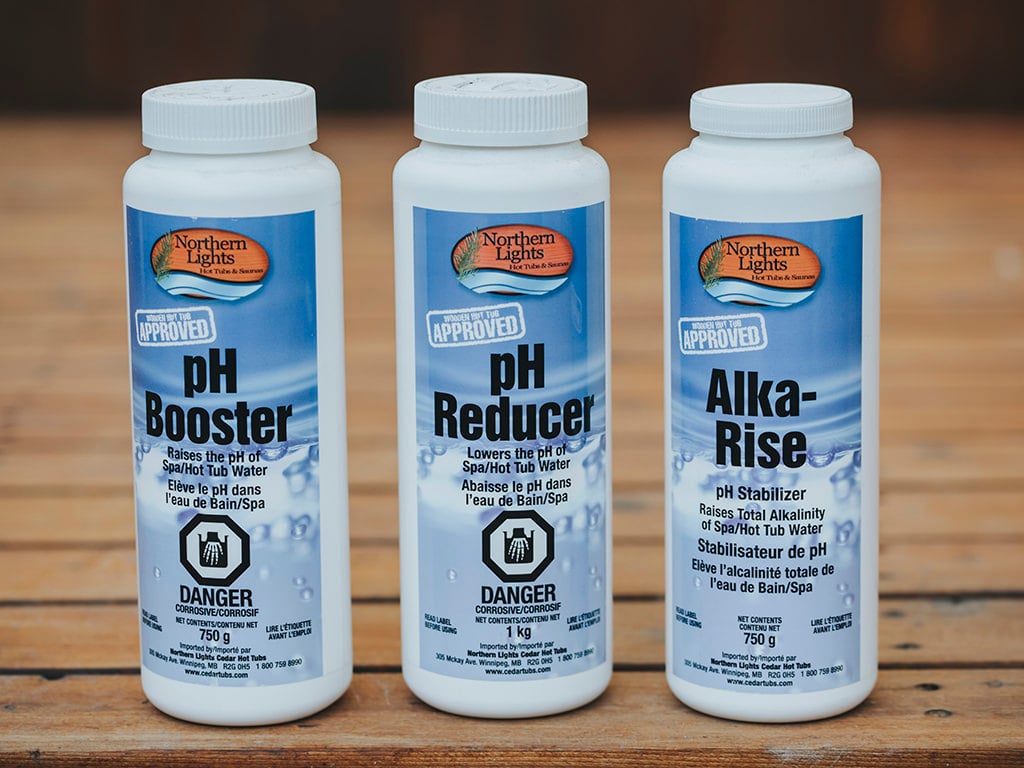
Alkalinity and hardness earn a place on the list only when your supply water is at an extreme. Soft water, common with wells and softeners, can shorten the life of metal parts such as the heater sheath. And if pH will not hold no matter what you add, alkalinity is the reason. Bring it into range with alkalinity increaser, then fix pH with pH Up or pH Down, and only then touch the sanitiser. That order matters more than most guides admit.
Bromine or chlorine for a cedar hot tub?
Bromine. It goes in every starter kit we ship, and here is why.
| Bromine | Chlorine | Ozone plus mineral ioniser | |
|---|---|---|---|
| Effect on cedar | Gentle at 3 to 5 ppm | Fine at 1 to 3 ppm, damaging at pool doses | None |
| In 100 degree water | Stays stable | Burns off fast | Ozone lasts minutes, the minerals last months |
| Smell | Mild | Public pool | None |
| Counts as a sanitiser | Yes | Yes | Treated as a supplement, not a sanitiser |
| Our advice | The default for every tub | Only if you never shock at pool strength | Cuts chemical use to a fraction. Keep a small bromine dose going. |
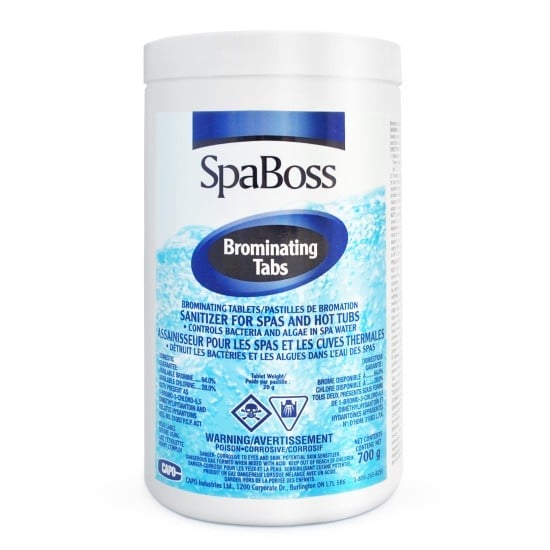
A floating dispenser loaded with mini bromine pucks holds the level without daily dosing. Look inside it once a week. Most of the murky-water calls we get come from a dispenser that ran empty a fortnight ago.
Chlorine works if you keep it low and never reach for pool shock. If you cannot resist the shock bottle, choose bromine and save yourself a grey tub.
If you would rather not think about ppm at all, our chemical-free system pairs a UV ozonator with a silver and zinc mineral ioniser. Ozone is a far stronger oxidiser than chlorine but lives only minutes, and the minerals carry the rest. Owners running the combo with neutral supply water spend about $75 to $100 a year on chemicals and filters. Regulators treat these systems as supplements rather than sanitisers, so we still keep a small bromine dose going, and so should you.
What do you add to a cedar hot tub on the first fill?
Fill it, test the tap water, balance pH, then sanitise. In that order, one product at a time.
- Fill from the hose with the filter in place. A brand new cedar tub weeps a little until the staves swell tight, which is normal and stops on its own.
- Test the fill water before adding anything. Well water and hard municipal water often arrive with pH or alkalinity already out of range, and that one test explains a lot of “I did everything right.”
- Bring pH to 7.2 to 7.6, alkalinity first if it is far out. Wait an hour, then retest.
- Add sanitiser. Load the dispenser with bromine pucks, or dose granules to 3 to 5 ppm. Wait at least an hour before anyone gets in.
- Heat, run the pump, and retest the next day. From there the daily, weekly and monthly checklist takes over.
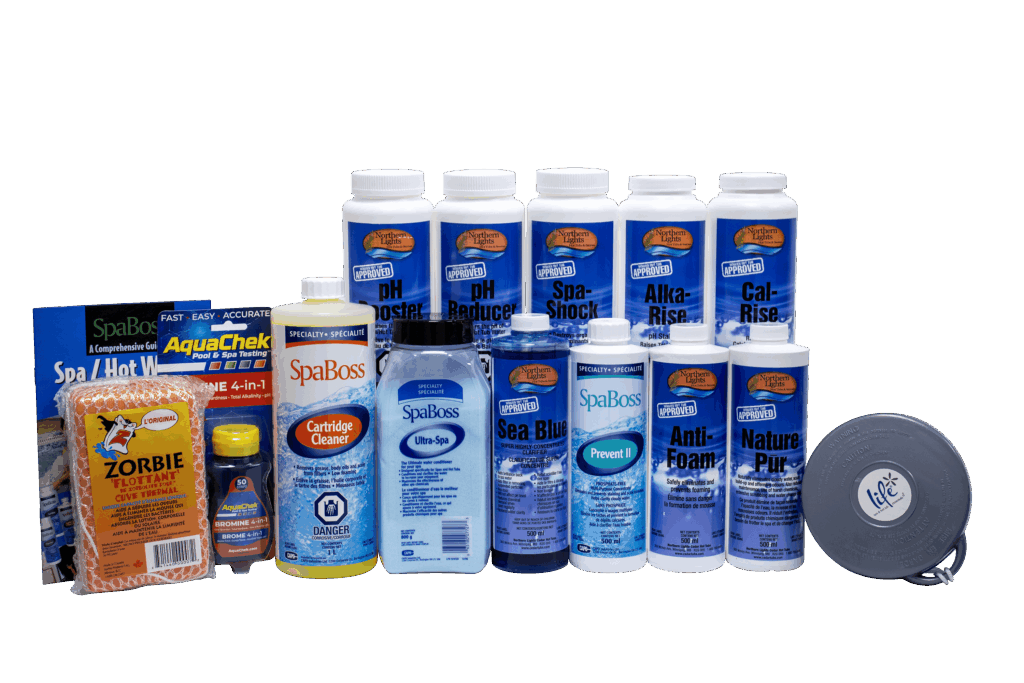
The starter kit covers everything on that list. And expect the first few fills to run tea coloured. That is tannin from fresh cedar, not dirt, and it fades with each refill. Do not shock it away.
Why is my cedar hot tub water cloudy?
Nine times out of ten the sanitiser ran out, the filter is loaded, or the pH drifted high. Check them in that order.
The dispenser is empty. This is the call we get most. Caught early, a dose of Spa Shock, a chlorine-free oxidiser, revives the water. Wait an hour before getting back in. If the water has gone properly murky, do not fight it. Drain, scrub, refill. Fresh water is cheaper than a week of chemicals.
The filter is clogged. A loaded cartridge starves circulation and the water clouds no matter what you pour in. Rinse it with a hose, never a pressure washer, soak it in filter cleaner monthly, and replace it on schedule. Clear hair and leaves off the bottom suction cover every time you use the tub.
pH crept above 7.8. Bromine slows right down and dissolved minerals fall out of the water as haze. Bring pH back down, then let a dose of clarifier pull the fine particles into the filter.
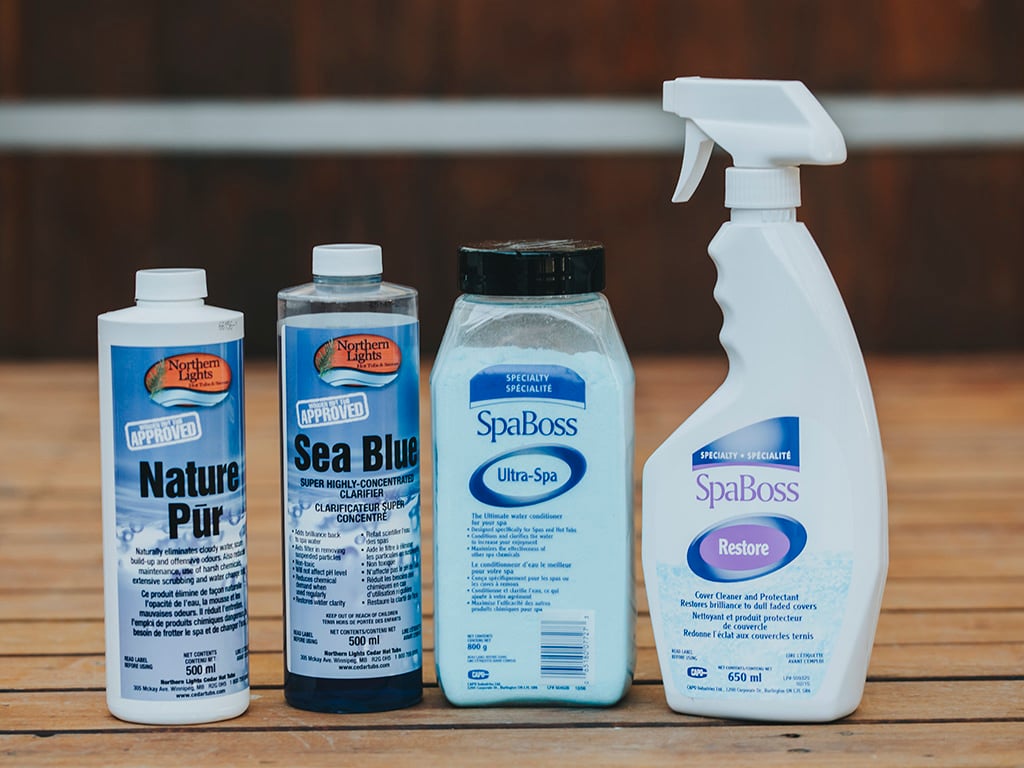
Work through those three and the water clears within a day or two. If it does not, call us at 1-800-759-8990 and we will go through the numbers with you.
Why is the water brown in a new cedar hot tub?
Tannin. Fresh Western Red Cedar releases the same compound that colours black tea, and the first few fills pick it up. It is harmless, it is not a chemistry failure, and it fades with each drain and refill. The one real mistake is shocking it at pool strength to fix the colour, which bleaches the wood grey and leaves the tannin exactly where it was.
Why is the water foaming?
Detergent. Laundry residue on swimsuits foams the moment the pump runs on high. A capful of defoamer clears it, and rinsing suits in plain water stops it coming back.
Why are there wood fibres in the filter?
Wrong chemicals, almost every time. Pool-strength chlorine, or a product never meant for wood, is lifting fibre off the staves. Stop, drain, and switch to bromine or something from our approved-for-wood-tubs range. Fibres in the filter are the tub telling you the chemicals are winning.
Why is the water green?
Algae, being fed. Phosphates arrive with leaves, sweat, lotion and some tap water. If the sanitiser reads fine and the water still greens within days, dose phosphate remover to cut off the food supply. More sanitiser will not fix a buffet.
Questions we get asked about cedar hot tub water
The ones that come up on the phone every week, answered the way we answer them on the phone.
How long can water sit in a cedar hot tub without chemicals?
Not long. Warm water with no sanitiser grows bacteria quickly, which is why Dan checks the puck dispenser every week rather than guessing. If the tub has sat hot with no sanitiser and the water has already gone cloudy, drain it and start fresh instead of trying to dose it back to health.
Can you use pool chlorine in a wooden hot tub?
No. Pool-strength chlorine breaks down wood fibre the same way it does in a paper mill. Low-dose hot tub chlorine at 1 to 3 ppm is tolerable. Bromine is better.
Can you run a cedar hot tub with no chemicals at all?
Nearly. An ozonator and a mineral ioniser together cut sanitiser use to a small fraction, and cedar’s own resistance to bacteria helps. Regulators do not count those systems as sanitisers on their own, so keep a small bromine dose going.
What pH should a cedar hot tub be?
7.2 to 7.6. Above 7.8 the water clouds and the sanitiser slows down. Below 7.0 it turns corrosive and starts on the heater.
How often should you drain a cedar hot tub?
Every two to three months with daily use, and never longer than six. Dissolved solids build up no matter how well you dose. While it is empty, scrub the ring at the waterline with a soft brush and water lightly mixed with bleach. Never stain the inside of the tub.
Do I need to test alkalinity in a cedar hot tub?
Only when pH will not hold, or when your fill water is unusually soft or hard. For most owners the everyday tests are sanitiser and pH, and alkalinity is the number you check when those two stop behaving.
Pull a test strip this week before you open a bottle. If sanitiser and pH are in range and the water still looks wrong, it is the filter. It is nearly always the filter.
For the full routine, including the exterior finish and the annual jobs, Dan wrote up how he maintains his own tubs, and our chemicals list covers what to keep on the shelf.